When Christopher Nolan announced that he was taking on Homer’s three-thousand-year-old poem The Odyssey in large-format 70mm IMAX, cinephiles questioned how cinema’s master of analytical time manipulation would handle ancient mythology, mythological monsters, and divine intervention. Could a director renowned for grounding wormholes in theoretical physics and atomic bomb tests in photochemical fire truly breathe life into sea nymphs, Cyclopes, and the vindictive wrath of Poseidon?
The answer arrives in a staggering, nearly three-hour monumental triumph of cinema. Nolan does not treat The Odyssey as a sword-and-sandal fantasy romp, nor as an airy CGI fairy tale. Instead, he approaches the Bronze Age Mediterranean like an unyielding, prehistoric survival epic. By filming with authentic, full-scale wooden triremes on real open waters between Greece, Malta, and Sicily, Nolan and cinematographer Hoyte van Hoytema subject both their cast and audience to the terrifying, salt-caked physics of the ancient world.
"Homer was not inventing magic; he was writing about the limits of human intelligence against an uncaring, violent universe." — Christopher Nolan, Director
Matt Damon’s Odysseus: The Exhaustion of Cunning
At the center of this titanic production stands Matt Damon, delivering what is arguably the most demanding and psychologically complex performance of his career. Hollywood has historically cast Odysseus as a swashbuckling adventurer. Damon, conversely, plays him as a brilliant, hollowed-out tactician—a veteran whose legendary cunning (*polymetis*) has kept him alive across ten years of the Trojan War, only to turn him into a cursed man whose pride dooms his entire crew.
Damon’s physical transformation is harrowing: weathered by salt blisters, sun-scorched skin, and the psychological trauma of knowing that every clever lie he tells costs another companion their life. In the sequence on the island of the Cyclops Polyphemus, Nolan refuses to rely on rubbery green-screen digital monsters. The encounter is staged with practical shadows, massive hydraulic animatronics, and claustrophobic cave acoustics that turn the mythological creature into an unyielding, primordial nightmare of survival.
Cross-Cutting Between Ithaca and the Open Sea
Structurally, Nolan deploys his signature non-linear precision with devastating dramatic payoff. The film cross-cuts across three distinct timelines: Odysseus’ perilous journey homeward across the Aegean, the brutal psychological siege of Ithaca where Penelope (Anne Hathaway) fends off an encroaching den of armed suitors, and Telemachus (Tom Holland) embarking on a desperate voyage to Pylos and Sparta to uncover whether his father is alive or dead.
Robert Pattinson delivers a spine-chilling, venomous turn as Antinous, the chief suitor. With razor-sharp arrogance and feral charisma, Pattinson turns Ithaca’s palace into a ticking time bomb of sexual menace and political extortion. When Anne Hathaway’s Penelope unweaves the funeral shroud by candlelight, Hathaway conveys such towering stoicism and unspoken sorrow that her domestic resistance matches the terror of any sea storm Odysseus faces.
| Specification | Production Details |
|---|---|
| Theatrical Release Date | July 15, 2026 |
| Director & Writer | Christopher Nolan (Based on Homer's Odyssey) |
| Running Time | 2 Hours 53 Minutes (173 mins) |
| Format & Projection | IMAX 70mm, 70mm Large Format & Digital IMAX |
| Production Budget | $250 Million |
| Global Box Office | $1.77 Billion Worldwide Gross |
Hoyte van Hoytema’s Maritime Photography & Ludwig Göransson’s Score
Technically, The Odyssey sets a new benchmark for practical filmmaking. Rather than shooting on dry soundstages with LED virtual volumes, Hoytema mounted custom waterproof 65mm IMAX cameras directly to rocking ship hulls in gale-force Mediterranean swells. When Charybdis pulls the sea into a roaring, abyssal vortex, the camera plunges with the men into boiling brine; the physical immediacy is so intense you feel the salt burning your throat.
Ludwig Göransson’s musical score is an astonishing sonic breakthrough. Forsaking traditional symphonic Hollywood strings, Göransson constructed instruments using Bronze Age metallurgical replicas, guttural Cretan throat singing, microtonal woodwinds, and thunderous wardrums that shudder through IMAX subwoofers with tectonic weight.
| Actor | Character / Mythological Role | Critical Performance Analysis |
|---|---|---|
| Matt Damon | Odysseus, King of Ithaca | A career-high performance blending ancient tactical cunning with tragic, soul-crushing weariness. |
| Tom Holland | Telemachus | Fierce, emotionally vulnerable portrayal of a boy forced to grow into a prince under impossible shadows. |
| Anne Hathaway | Penelope | Regal, steely resistance that anchors the political and emotional heart of the Ithaca siege. |
| Robert Pattinson | Antinous | Terrifyingly charismatic, predatory antagonist commanding the screen with sinister swagger. |
| Charlize Theron | Calypso | Otherworldly, ethereal and heartbreaking depiction of divine loneliness on the island of Ogygia. |
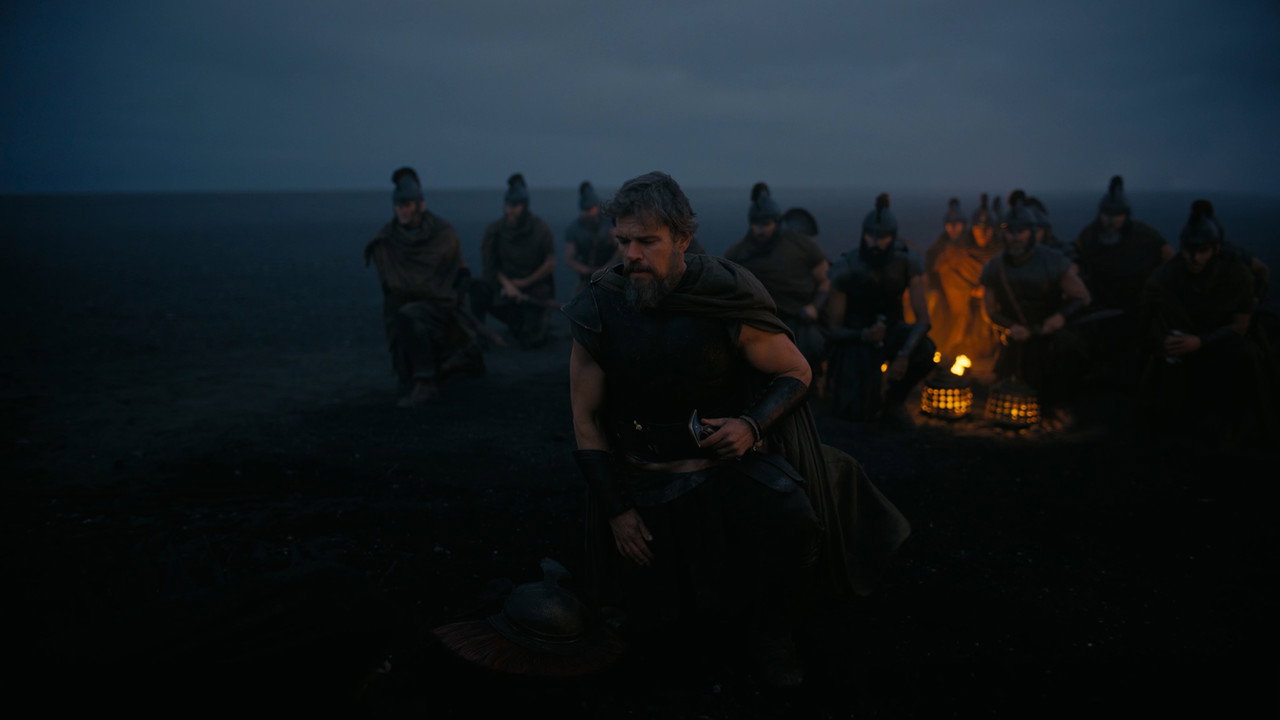
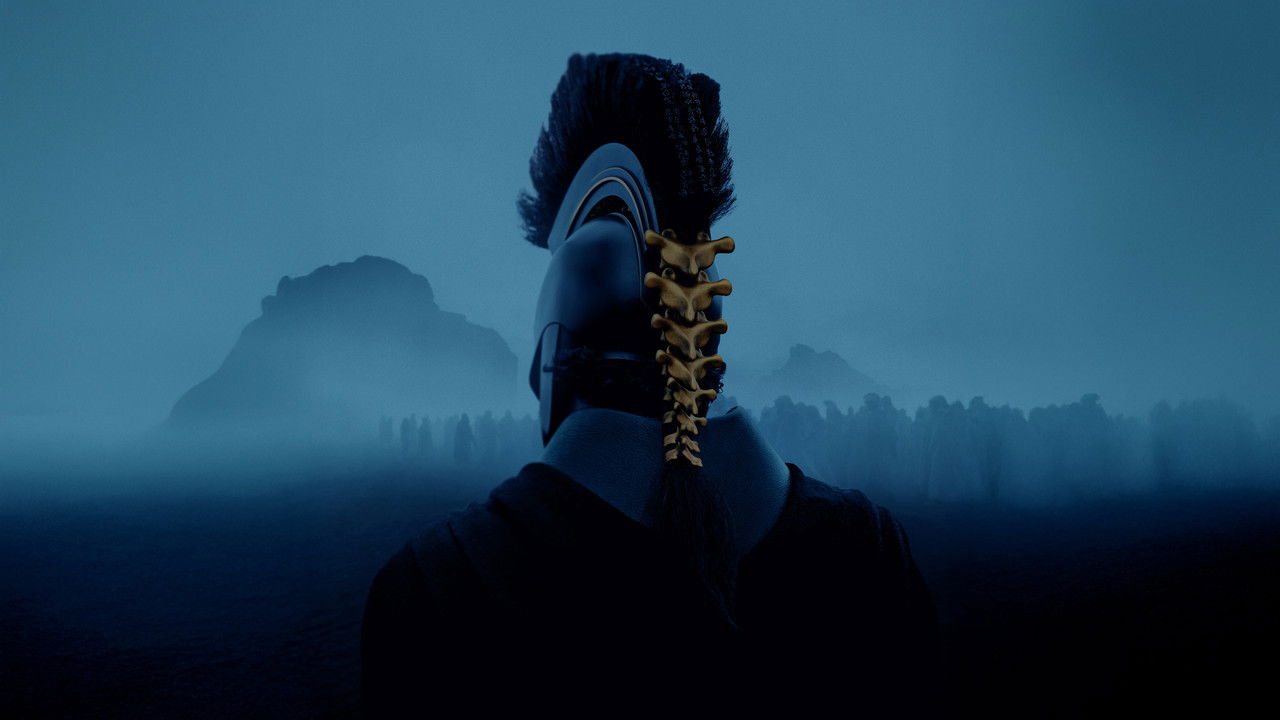
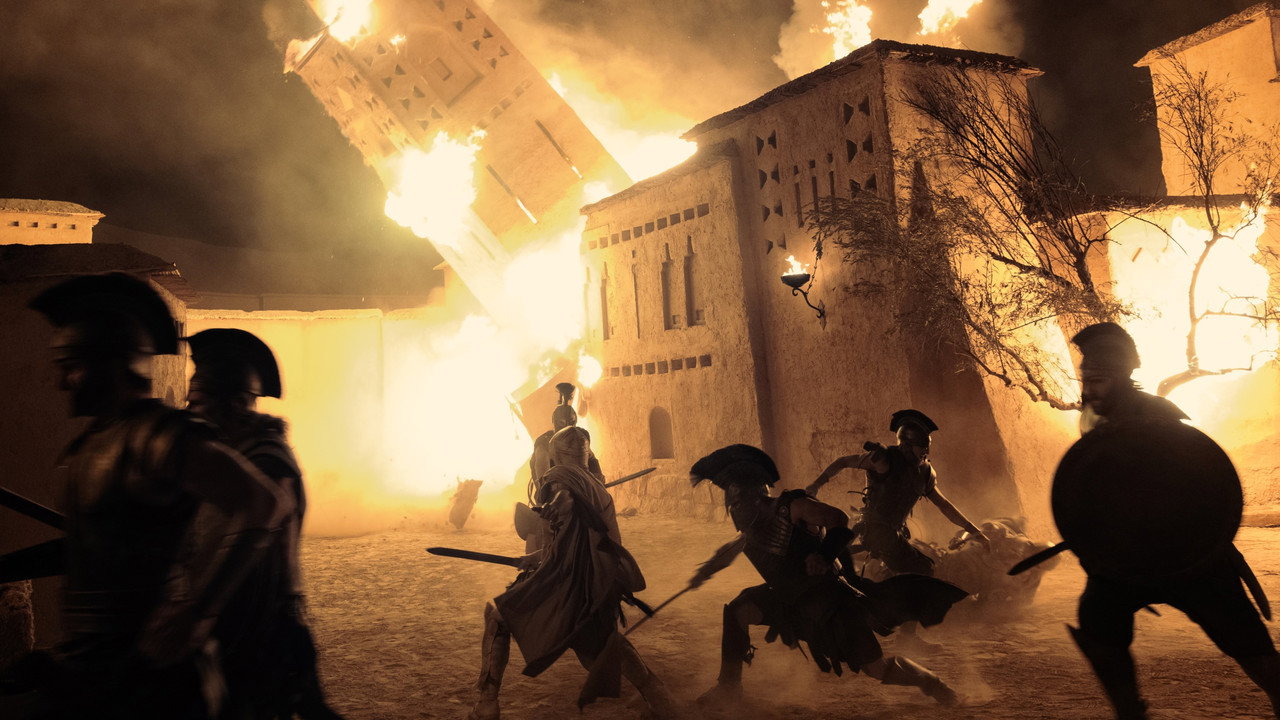
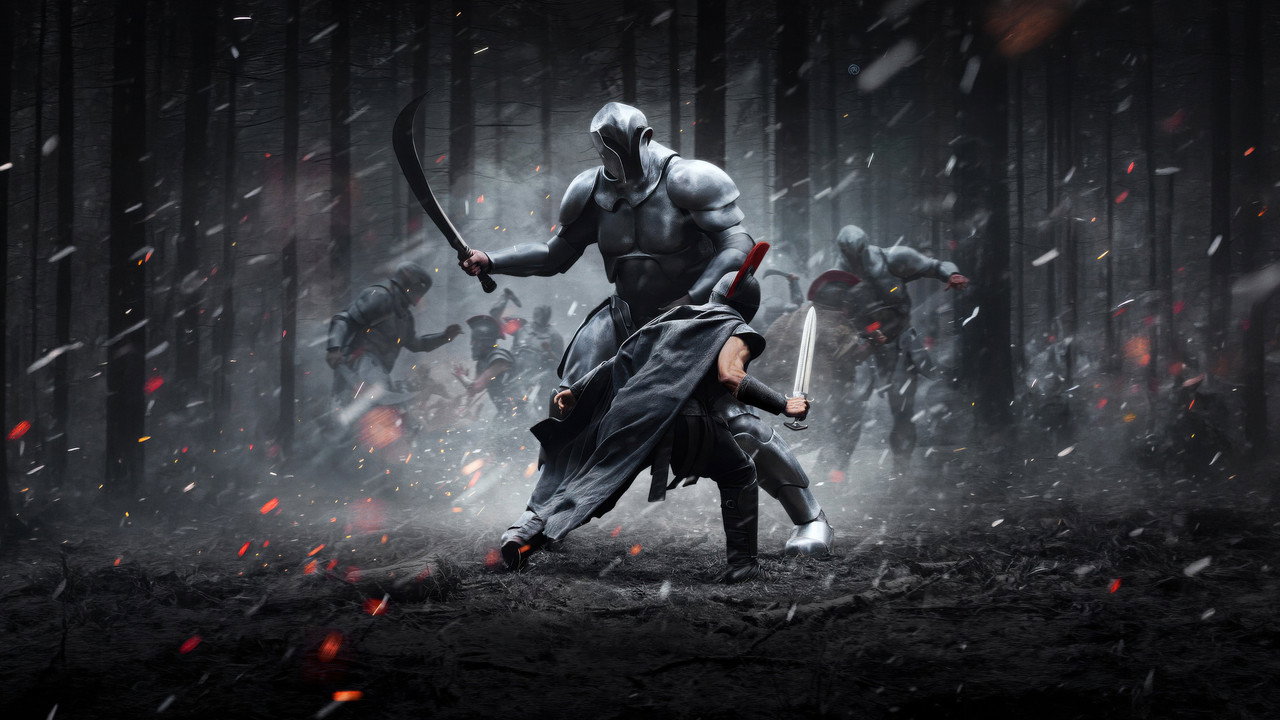
Cinematic Stills & Production Highlights
High-resolution 70mm IMAX frames showcasing the open-sea trireme photography, ancient palaces, and harrowing trials of The Odyssey.
The Climax: The Bow of Odysseus and the Hall of Blood
The film’s final hour—the homecoming to Ithaca—is a staggering exercise in sustained cinematic dread that explodes into visceral Greek tragedy. When Odysseus, disguised in beggar's rags, steps forward to string the unyielding great hunting bow, Nolan directs the sequence with unbearable silence, allowing the creak of polished horn and seasoned ash wood to fill the auditorium.
The subsequent slaughter of the suitors is not stylized Hollywood violence; it is brutal, terrifying, and deeply tragic. Nolan reminds us that while justice has been restored, Odysseus returns to a home drenched in blood, forever changed by the horrors of the voyage. It is a masterpiece of storytelling that cements Nolan as the preeminent cinematic visionary of our era.
MovieHive Verdict: Christopher Nolan's The Odyssey is an uncompromised, awe-inspiring cinematic achievement. Anchored by Matt Damon’s career-defining grit, Hoyte van Hoytema’s breathtaking open-sea 70mm photography, and Ludwig Göransson’s primal score, this is ancient storytelling brought to ferocious, monumental life.
✓ What Works
- Matt Damon's towering, psychologically nuanced portrayal of Odysseus.
- Breathtaking practical maritime cinematography shot in open Mediterranean waters.
- Ludwig Göransson's primal, acoustic Bronze Age percussion score.
- Spellbinding performances from Robert Pattinson and Anne Hathaway.
✕ What Stumbles
- Demanding 173-minute runtime requires patience from casual moviegoers.
- Nolan's trademark dense sound mix occasionally obscures ancient Greek poetic dialogue.
Frequently Asked Questions